
Charleston County Criminal Court Records
Charleston County's main criminal court records for felony and higher-level prosecutions are General Sessions records in Circuit Court. South Carolina Circuit Court has two divisions: Court of Common Pleas for civil cases and Court of General Sessions for criminal cases. The Charleston County Clerk of Court keeps General Sessions case records at the 100 Broad Street courthouse office, while the Ninth Circuit Solicitor prosecutes criminal cases for Charleston and Berkeley Counties.
Lower criminal matters may start in Magistrate Court or Municipal Court. Those courts handle summary criminal offenses, traffic charges, warrants, bonds, preliminary hearings, and local ordinance cases. A case can therefore have an early lower-court footprint before it becomes a General Sessions prosecution. The full criminal case file should not be confused with the narrower charge-focused record described in Charleston County arrest records and charges.
The Ninth Circuit Solicitor homepage identifies the Charleston and Berkeley County prosecution office.
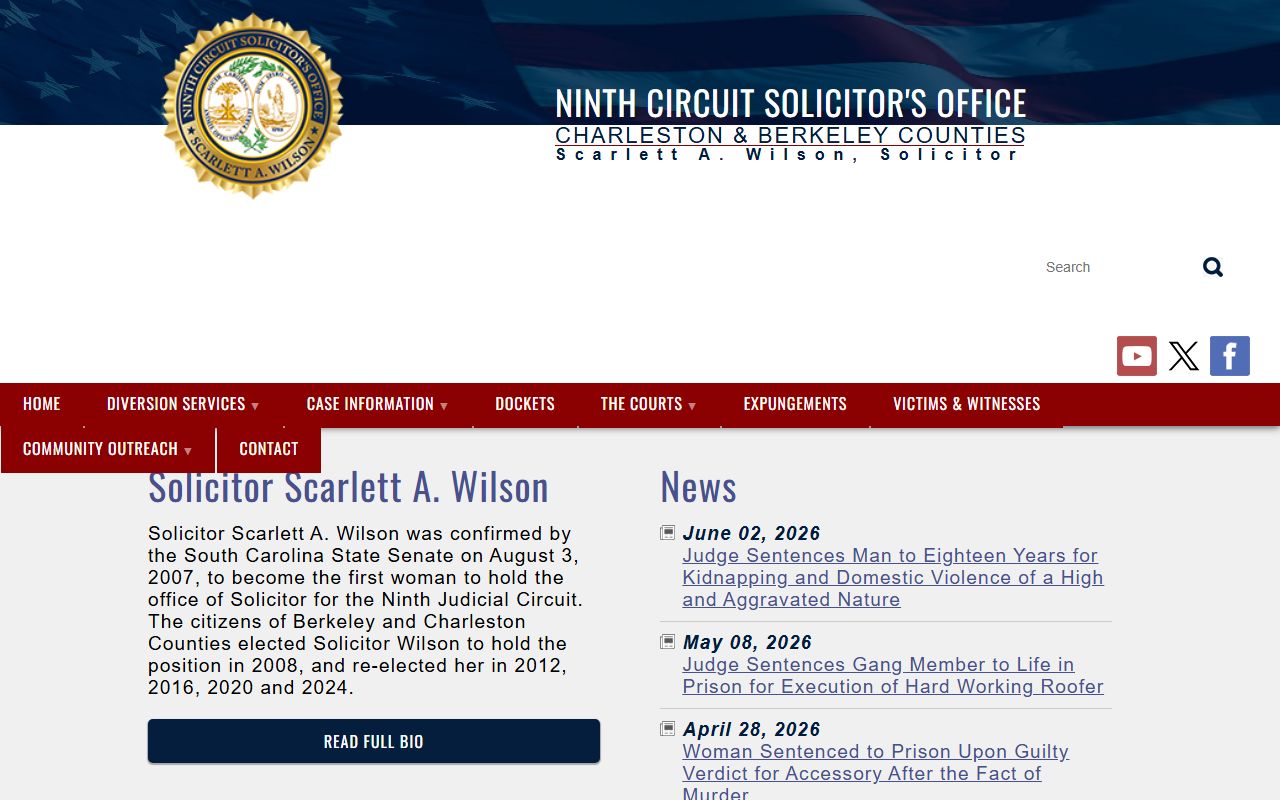
The Solicitor's role explains why some criminal case information appears through prosecution resources as well as court records.
Search Charleston County Criminal Cases
The main public court search for General Sessions criminal case records is the Charleston County Public Index. Use Circuit Court as the court type and General Sessions as the agency. A defendant name search can work, but a case number or warrant number is more precise. The Clerk's search instructions give an example General Sessions direct indictment format without dashes or spaces.
The Solicitor also provides a case-search route for prosecution information. The Ninth Circuit Solicitor case search can help users check prosecution-side case details, but it does not replace the Clerk's court record or a certified court copy.
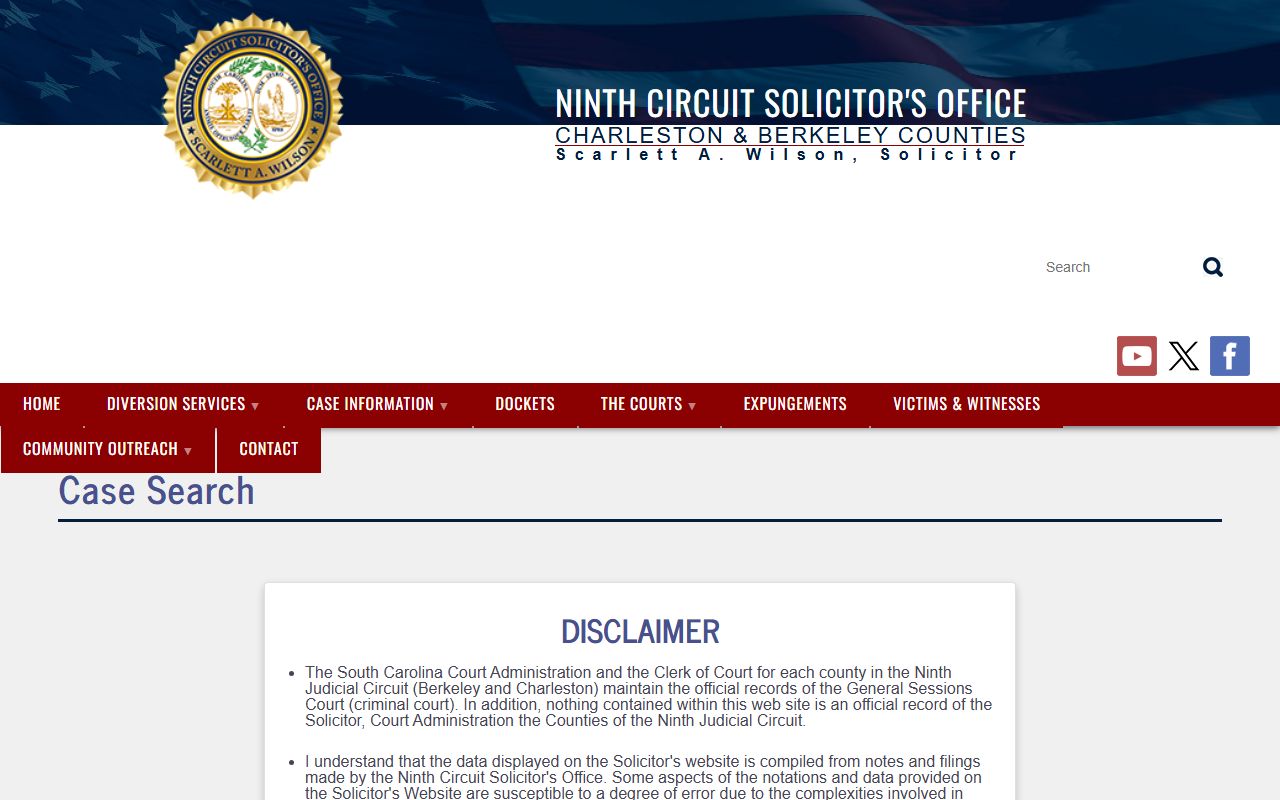
Using both court and Solicitor sources can help reconcile a pending prosecution, but the court docket controls the filed court case history.
- Open Public Index and accept the disclaimer.
- Select Circuit Court and General Sessions when searching higher-level criminal cases.
- Enter the defendant's name, warrant number, or General Sessions case number without dashes or spaces.
- Use date type, beginning date, ending date, or action type only when the search returns too many matches.
- Open the case number, then review parties, actions, financials, disposition, and any available document links.
- Contact the Clerk of Court when a certified copy or official file confirmation is needed.
Charleston County Criminal Case Flow
A criminal case record grows as the prosecution moves through court. Early entries may show a warrant, bond, charge, or preliminary-hearing history. General Sessions entries may then show indictment activity, arraignment, motions, hearings, plea negotiations, trial settings, verdicts, dispositions, sentence terms, financial entries, and post-judgment orders. Not every case reaches trial. Many cases resolve through plea, dismissal, diversion, or another disposition.
Case flow: Charges Filed › Arraignment › Pretrial / Motions › Plea or Trial › Disposition › Sentencing
| Stage | What the Record May Show |
|---|---|
| Charges Filed | Warrant number, direct indictment, offense text, court agency, defendant name, and bond-related entries. |
| Arraignment | A hearing or entry where the defendant addresses the filed charge and plea posture begins. |
| Pretrial / Motions | Motions, notices, orders, continuances, discovery-related entries, bond issues, and hearing settings. |
| Plea or Trial | Plea entries, trial settings, verdicts, dismissal entries, or Solicitor action resolving the charge. |
| Disposition | The outcome for each charge, such as guilty, not guilty, dismissed, nolle prosequi, or disposed. |
| Sentencing | Sentence, probation, fines, costs, jail or prison terms, suspended time, or other court-ordered conditions. |
What Charleston Criminal Records Show
A Charleston County criminal court record is a case-level file. It can include the charge as filed, but its value is the sequence after filing: docket actions, court hearings, motions, plea or trial result, disposition, sentence, and financials. Public Index research also notes that case screens may show parties, associated cases, actions, financials, and documents or images when available.
| Field | What It Shows |
|---|---|
| Case Number | The General Sessions case number, warrant number, or related court number used to identify the prosecution. |
| Defendant | The accused person's name and party role in the criminal case. |
| Court / Agency | Circuit Court and General Sessions for higher-level prosecutions; Magistrate or Municipal Court for some lower matters. |
| Charges | The filed accusation, offense description, warrant or indictment context, and any later amendments or dismissals shown in the docket. |
| Actions | Docket entries such as hearings, motions, orders, pleas, continuances, dispositions, and sentencing events. |
| Plea | The defendant's formal response when the record includes it, such as guilty or not guilty. |
| Disposition | The outcome of each charge or case, including conviction, dismissal, acquittal, or other resolution. |
| Sentence | Punishment or court conditions after conviction, such as jail, prison, probation, suspended time, fines, or costs. |
| Financials | Costs, fines, fees, assessments, or payment-related entries when the public tab includes them. |
Charges vs. Charleston Convictions
A filed charge is not the same as a conviction. A charge is an accusation that begins or moves a criminal matter through court. A conviction is an outcome after a guilty plea, guilty verdict, or other judgment that the defendant committed the offense. Charleston County criminal court records may show charges that were amended, reduced, dismissed, or resolved without a conviction.
| Point | Charge | Conviction |
|---|---|---|
| Meaning | An accusation filed through warrant, indictment, complaint, citation, or prosecution action. | A court outcome based on a guilty plea, guilty verdict, or equivalent judgment. |
| Timing | Appears early in the case record. | Appears after plea, trial, or final disposition. |
| Can change? | Yes. It may be amended, reduced, dismissed, or dropped. | Can be appealed, corrected, pardoned, or affected by later legal action, but it is the case outcome unless changed. |
| Record use | Useful for tracking accusations and prosecution status. | Used to understand final criminal liability and sentence. |
Ninth Circuit Criminal Records
South Carolina uses the term Solicitor for the prosecutor. Charleston County is in the Ninth Judicial Circuit with Berkeley County. The Ninth Circuit Solicitor's Office, led by Scarlett A. Wilson, prosecutes General Sessions cases, operates victim and witness services, provides diversion programs, handles eligible expungement applications, and offers prosecution-side case resources.
The Ninth Circuit Solicitor expungement source is part of the criminal-record access chain.
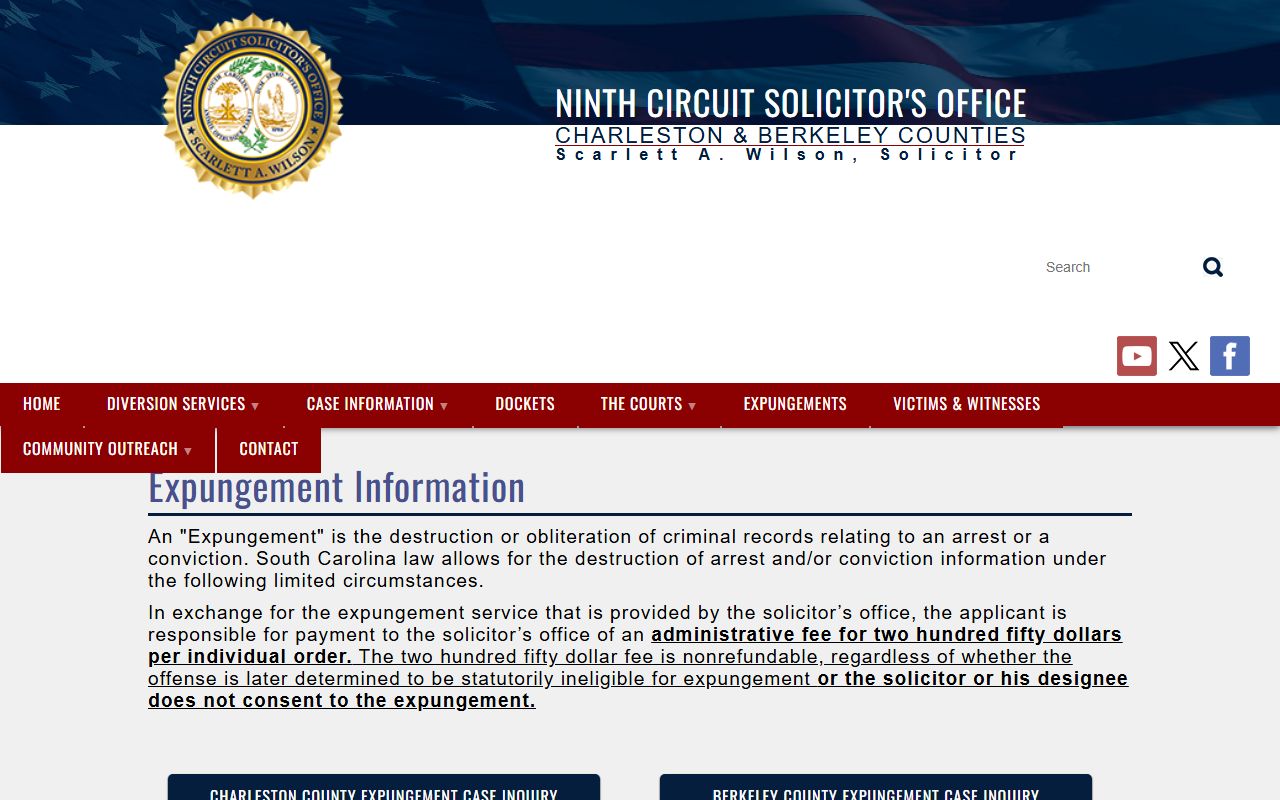
Expungement questions for Charleston County criminal records often start with the Solicitor because South Carolina law assigns many criminal expungement applications to the circuit solicitor.
Diversion can affect the court record. The Solicitor research identifies Pretrial Intervention, Alcohol Education Program, Traffic Education Program, Worthless Check Unit, and Juvenile Arbitration. Successful completion may lead to dismissal and possible expungement eligibility, but expungement should not be assumed without the required application, order, and agency process.
Public Access to Charleston Criminal Records
Charleston County criminal court records are public in many adult cases, but access is bounded by South Carolina statutes, court rules, and sealed-record orders. S.C. Code Section 30-4-30 provides a general public-record inspection and copying right unless another law or exemption applies. Rule 610, SCACR governs Judicial Branch records requests and allows denial when information is available through public court websites or includes confidential data.
Criminal expungement is addressed by S.C. Code Section 17-22-910. The South Carolina Judicial Branch also publishes an expungement application overview explaining that expungement can remove, seal, or destroy eligible records of arrest, charge, or conviction.
The state statute source is shown in the South Carolina Title 17 Chapter 22 source.
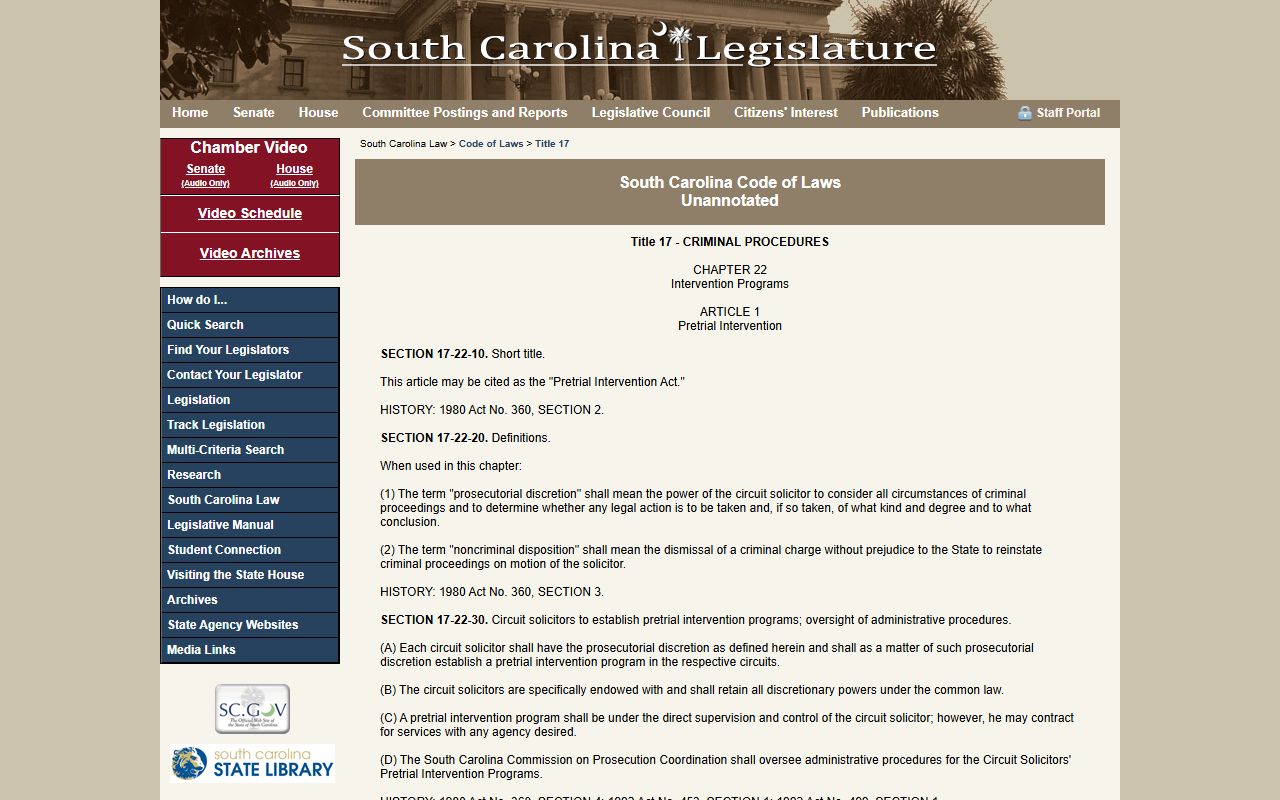
The statute source matters because expungement eligibility depends on the exact criminal-record category and the court or solicitor process assigned by law.
The statewide process is summarized in the South Carolina Judicial Branch expungement overview source.
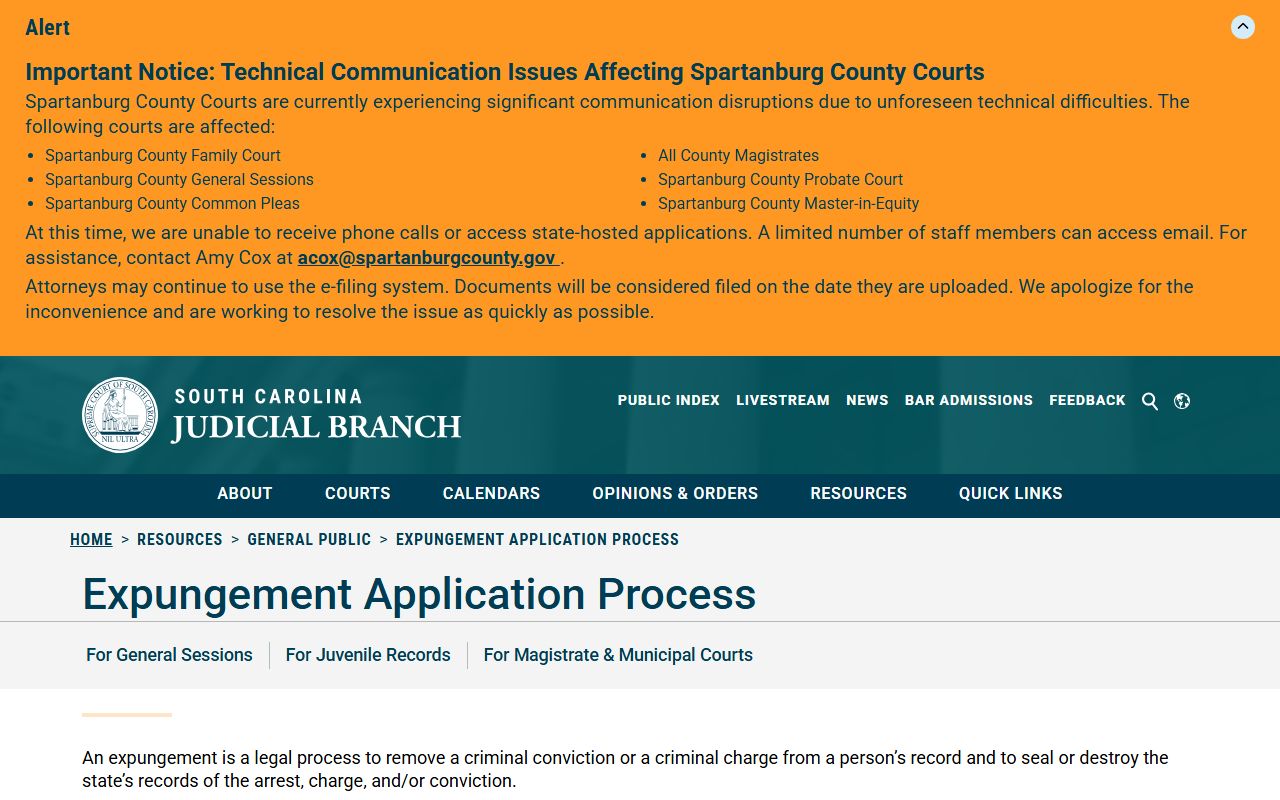
State guidance is important because expungement rules depend on the charge, disposition, court level, and statutory eligibility.
Sealed vs. Expunged Criminal Records
Sealed and expunged are related but not identical. A sealed Charleston County criminal court record is closed from ordinary public access by law or court order. An expunged record is removed, sealed, or destroyed under the applicable South Carolina process. Public searchers should not expect an expunged matter to appear in normal portals, and a sealed matter may require a court order or proof of legal authority before access.
| Point | Sealed | Expunged |
|---|---|---|
| Public visibility | Hidden from general public search. | Removed, sealed, or destroyed for eligible records under the expungement process. |
| How it happens | By statute, court order, or confidentiality rule. | Through an application and order when South Carolina law allows it. |
| Common examples | Juvenile matters, protected family matters, some sealed court orders. | Eligible dismissed, not-guilty, diversion, or qualifying criminal matters. |
| Where to start | The court that sealed or maintains the record. | Ninth Circuit Solicitor or the Magistrate/Municipal Court procedure for lower-court cases. |
The Charleston County expungement case inquiry portal is one local source for checking expungement-related status.
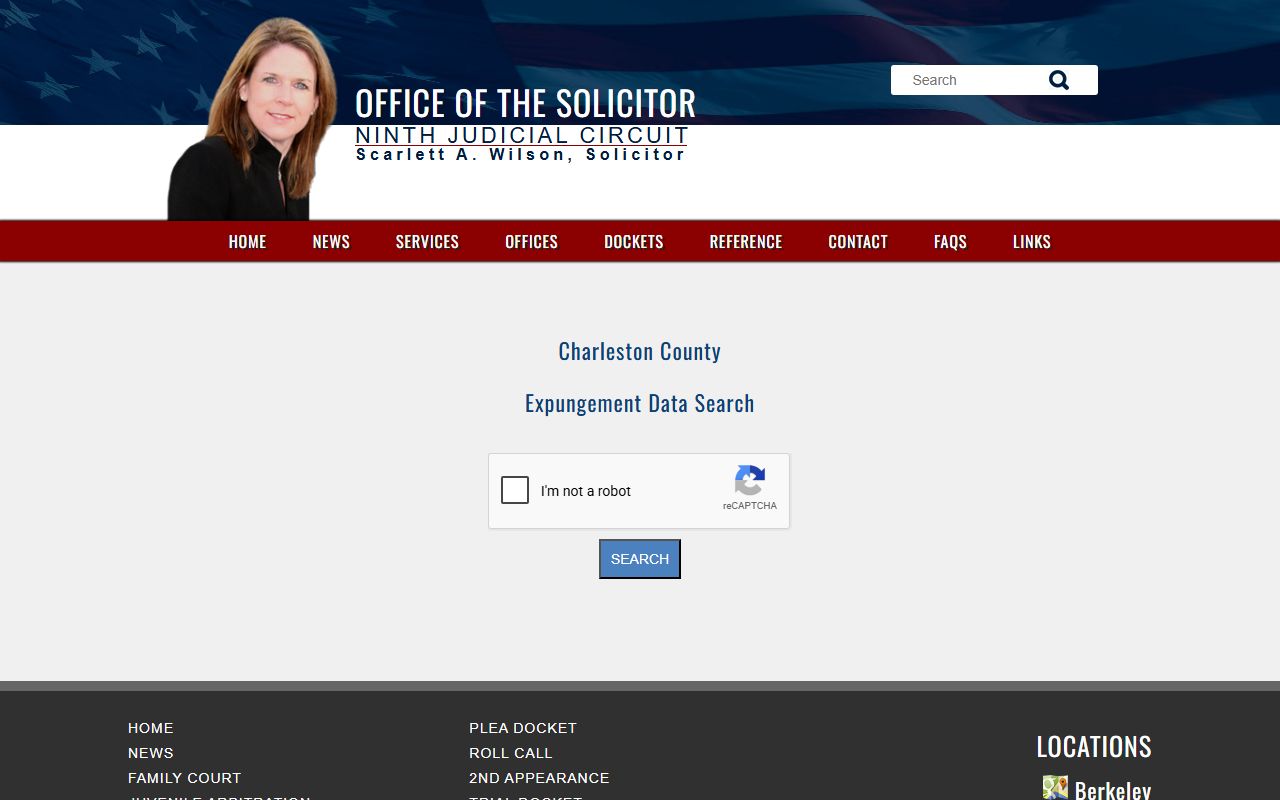
The inquiry portal supports the expungement process, but eligibility and final record treatment still depend on South Carolina law and the required order.
Restricted Charleston Criminal Records
Juvenile records are the clearest restricted category. S.C. Code Section 63-19-2010 makes juvenile court records confidential and open only by court order to people with a legitimate interest, with limited exceptions. Family Court juvenile matters and juvenile justice records should not be treated like adult General Sessions records. Expunged matters, sealed cases, protected identifiers, and sensitive records tied to mental-health or family proceedings may also be unavailable in public search results.
Public Index redaction rules also matter in criminal cases. The disclaimer permits written requests to remove protected identifiers such as Social Security numbers, driver's license numbers, state ID numbers, passport numbers, bank or card numbers, PINs, codes, and passwords from online images or copies. Home addresses are also removed from public index display beginning January 1, 2026.
Note: Missing criminal search results can mean no public match, a different court level, sealed access, expungement, or incorrect search terms.
Charleston County Criminal Record Requests
For General Sessions criminal case records, contact the Charleston County Clerk of Court. For prosecution information, contact the Ninth Circuit Solicitor. For defense appointment or indigent-defense questions, the South Carolina Commission on Indigent Defense lists the Charleston County Public Defender office in Circuit 9. For jail custody, use the inmate search channel rather than the court case file.
Clerk of Court, General Sessions
100 Broad Street, Suite 106
Charleston, SC 29401-2258
(843) 958-5000
Monday-Friday, 8:30 a.m. to 5:00 p.m.