
Charleston County Arrest Records and Charges
Charleston County arrest records and court charge records are related, but they are not the same file. The arrest side starts with the law-enforcement agency, booking process, warrant, incident number, or jail intake. The court charge side begins when an accusation moves into a court record. In Charleston County, charge records may start in Magistrate Court, Municipal Court, or Circuit Court General Sessions depending on the offense, issuing agency, and later prosecution path.
The Sheriff Al Cannon Detention Center and the official jail search are the better sources for current custody and booking status. The Charleston County inmate search may show current and past booking fields, while Public Index and court records show the case, charge, docket activity, bond, and disposition once the matter is filed. The full plea, hearing, sentence, and appeal history belongs in the Charleston County criminal court record, not in a stand-alone arrest entry.
The North Charleston Police Department CRIMEWATCH portal is one law-enforcement source for arrests, cases, incidents, most wanted items, warrants, forms, and local police notices.
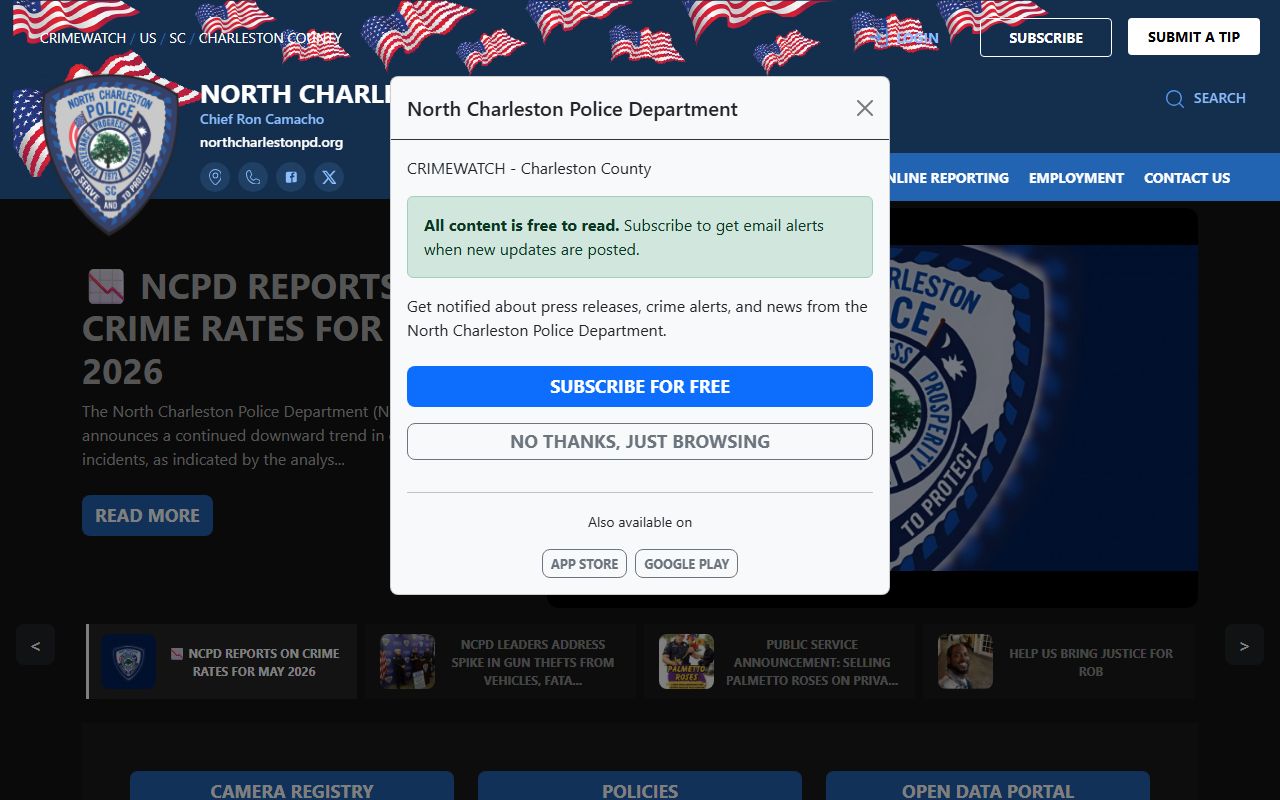
Police portals can help identify the agency or incident path, while Charleston County court charge records show what was filed after arrest.
Find Charleston County Charges After Arrest
For court charges after arrest, start with the Charleston County Public Index. General Sessions criminal records may include warrant number, indictment or direct indictment, defendant name, case number, charge entries, action history, plea, disposition, sentence, bond, financials, hearings, and related documents. The official search tips say a General Sessions case number can be searched without dashes or spaces, using the format shown in the research file as an example. Name searches can use defendant first, last, and middle name when known.
- Open the Charleston County Public Index and accept the disclaimer before searching.
- Use Circuit Court and General Sessions for higher-level criminal charges, or the appropriate lower court for summary or traffic matters.
- Search by defendant name, case number, warrant number, filing date, event date, or action type when those details are known.
- Open the case record and review each charge, bond entry, docket action, plea, disposition, and sentence field.
- Use the Clerk of Court, Solicitor, Magistrate Court, or Municipal Court when online results do not show the official or current status.
Public Index is not the official record. Its disclaimer says Charleston County and its officers do not warrant accuracy, reliability, or timeliness, and official records remain with the office responsible for the file. That matters for Charleston County arrest records because an online charge entry may lag behind a court order, solicitor action, bench warrant discharge, expungement, or clerk update.
The North Charleston Police Department official page gives agency context for one of the largest municipal law-enforcement departments in the county. Use the agency source for police-report direction, then verify court charges in the public case system or with the issuing court.

Agency pages and court portals answer different questions, so both may be needed when tracing an arrest into a formal court charge.
Charleston County Charging Documents
A charging document is the written accusation that moves an arrest, warrant, citation, or law-enforcement referral into court. In South Carolina, serious criminal prosecutions in Charleston County are handled in Circuit Court General Sessions by the Ninth Circuit Solicitor. Lower-level charges may begin in Magistrate Court or Municipal Court. A single arrest can lead to no charge, one charge, several charges, or amended charges after prosecutor review.
| Document | Who Uses It | What It Does | Charleston County Record Clue |
|---|---|---|---|
| Complaint or warrant-based charge | Law enforcement, Magistrate Court, or Municipal Court | Starts or supports a lower-court accusation, arrest warrant, bond matter, or summary offense. | May connect to warrant number, arresting agency, bond, citation, and first court date. |
| Information or solicitor filing | Ninth Circuit Solicitor | Reflects prosecutor filing, diversion review, or formal handling of eligible criminal matters. | May appear with General Sessions case activity, solicitor case search, or diversion records. |
| Indictment or direct indictment | Grand jury or General Sessions process | Creates or advances a formal Circuit Court felony prosecution. | General Sessions examples use GS case numbers and may be searched without dashes or spaces. |
The City of Charleston Police Department is another local agency source for incident and report direction. Its records may explain why a person was arrested, but the final charge name, court number, plea, disposition, and sentence must be checked through the court or solicitor channel.
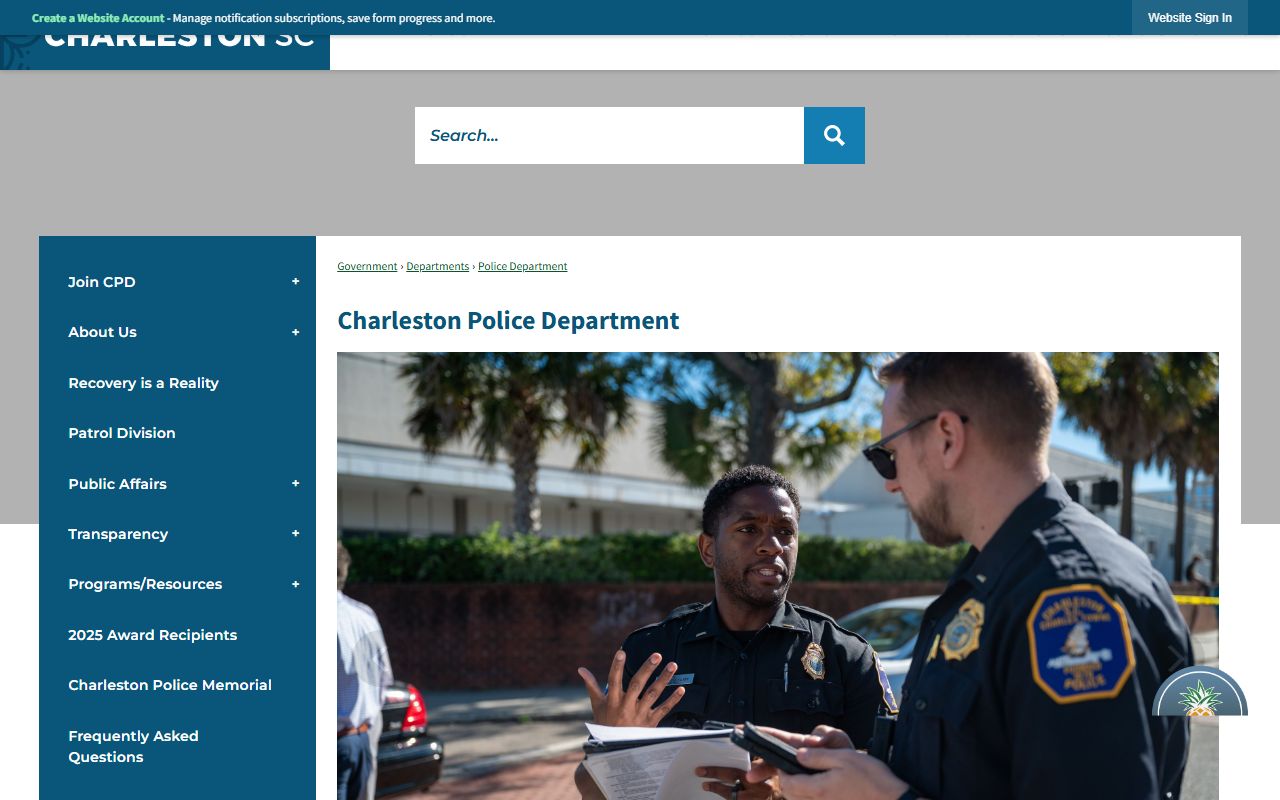
Police department records can name the event or agency, while the court file shows whether that event became a filed Charleston County charge.
Charleston County Charge Status
Charge status can change several times after arrest. The Public Index may show pending, disposed, dismissed, amended, or other action entries, while solicitor records can show diversion or expungement paths. A charge listed after booking is only an accusation unless a court later enters a conviction or other disposition. The status should be read with the docket date, court level, and issuing agency.
| Status | What It Means | Where to Verify |
|---|---|---|
| Pending | The charge is open or not yet fully resolved in the court record. | Public Index, issuing court, or Solicitor case search. |
| Amended or reduced | The filed charge changed, often after prosecutor review, plea talks, or court action. | General Sessions docket actions and Solicitor records. |
| Dismissed or not guilty | The charge did not end in conviction, but a public trace can remain unless expunged. | Court disposition entry and expungement status. |
| Nolle prosequi | The prosecutor declined to proceed on that charge at that time. | Ninth Circuit Solicitor or court docket entry. |
| Disposed or sentenced | The court entered an outcome, sentence, fine, probation, or other final action. | Final court record and Clerk of Court copy. |
The county's Consolidated Emergency Communications Center documents nonemergency contacts and notes that some agencies offer online reporting for non-emergent incidents. That reporting channel is separate from court charge records, but it helps identify which agency may hold a police report tied to an arrest.
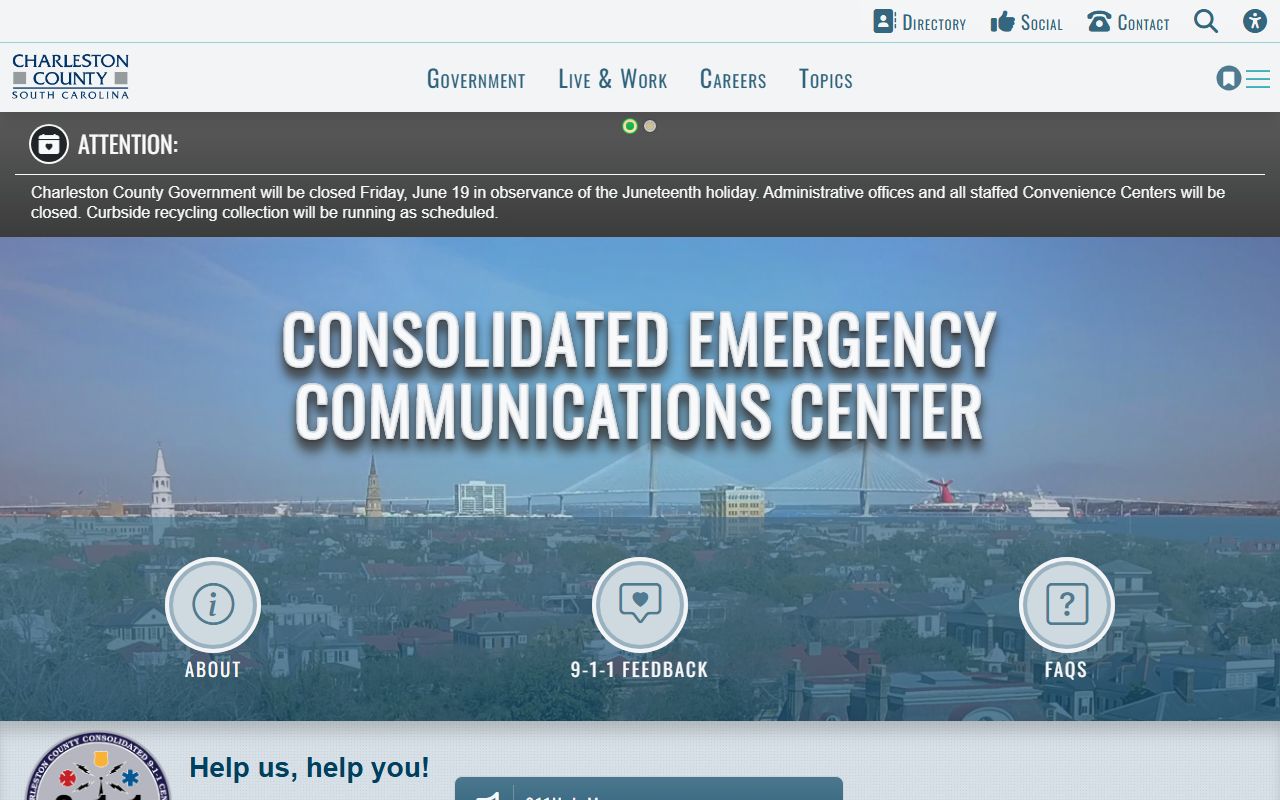
Dispatch and incident-report channels help locate the law-enforcement source, while charge status must still be confirmed in court or prosecutor records.
Charges vs Convictions
A Charleston County charge is an accusation. A conviction is a court outcome after a guilty plea, verdict, or qualifying adjudication. Public Index and solicitor records can show charges that were later dropped, reduced, dismissed, diverted, or expunged. That is why a Charleston County arrest records search should not be treated as proof that a person was convicted.
| Point Compared | Charge | Conviction |
|---|---|---|
| Record stage | Filed after arrest, warrant, citation, or prosecutor review. | Entered after plea, verdict, or final court action. |
| Meaning | Formal accusation that still may change. | Court finding or plea that the person committed the offense. |
| Where it appears | Booking record, warrant record, Public Index, lower-court docket, or solicitor search. | Disposition, sentence, financials, probation, or final order in the court case. |
| Risk in reading | May be old, amended, or dismissed. | Still should be checked against appeals, expungement, or later orders. |
South Carolina law also separates public access from eligibility to use a record. Public court data is not the same as a consumer background report. FCRA-regulated screening requires lawful purpose, proper notice, and compliant sources.
Restricted Charleston County Charge Records
Some charge records are not open to the public, even when an arrest occurred. South Carolina juvenile court records are confidential and are open only by court order to persons with a legitimate interest, with limited exceptions. Adoption and termination-of-parental-rights records are sealed. Mental-health proceedings in Probate Court are sensitive. Public Index redaction rules also protect Social Security numbers, driver's license numbers, state ID numbers, passports, bank and card data, PINs, passwords, and home addresses.
| Record Treatment | What It Means | Charleston County Path |
|---|---|---|
| Sealed | The record is closed from general public view by law or court order. | Ask the responsible court about whether a public portion or court order is available. |
| Expunged | Eligible arrest, charge, or conviction records are sealed, destroyed, or removed from normal public access. | Most criminal expungement applications are administered through the Ninth Circuit Solicitor. |
| Redacted | Protected identifiers are removed from public copies while the case may remain searchable. | Use the Public Index redaction request process or the office holding the official record. |
South Carolina Judicial Branch guidance for Magistrate and Municipal Court expungements is important when a charge began in a lower court and did not move to General Sessions. Dismissal, not guilty result, or diversion does not always remove the record automatically.
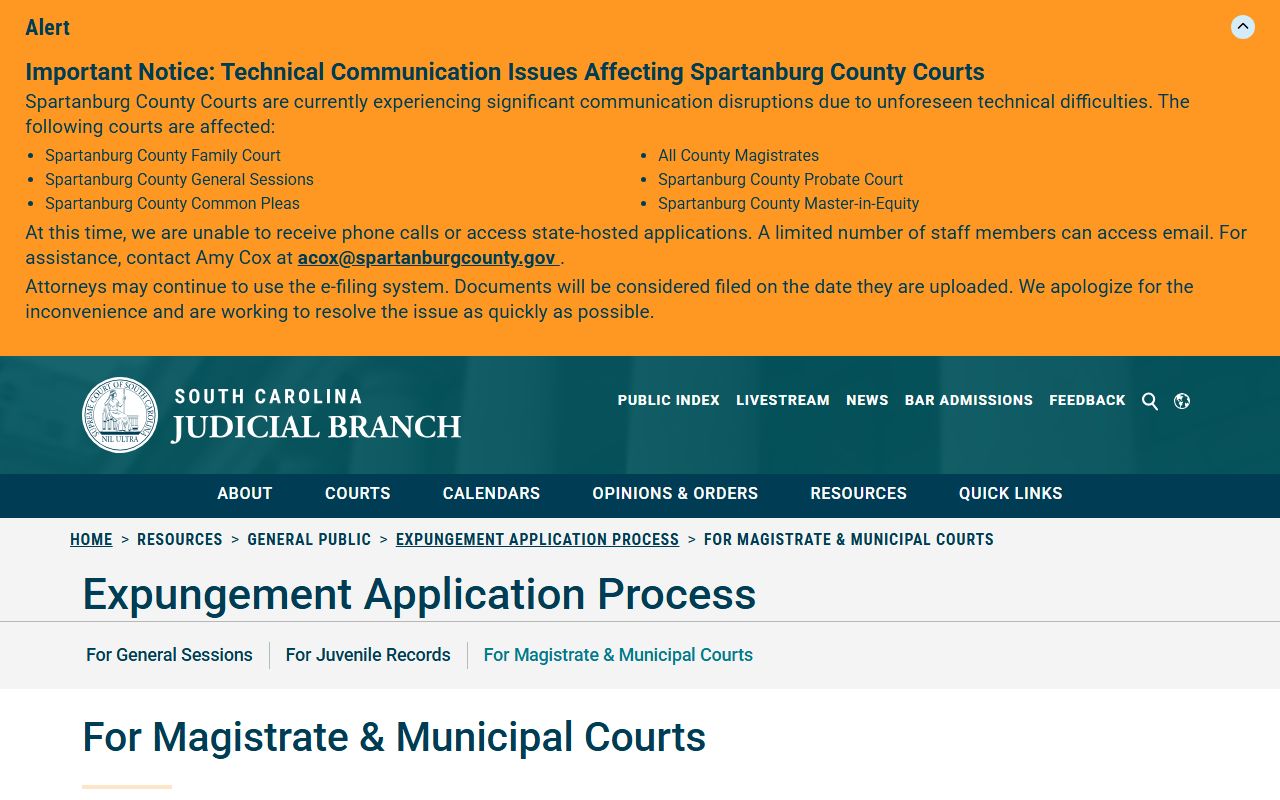
Lower-court charge records may need a separate expungement process from General Sessions or solicitor-handled matters.
Charleston County Prosecutor Review
South Carolina uses the term Solicitor for the local prosecutor. Charleston County is in the Ninth Judicial Circuit, which serves Charleston and Berkeley Counties. The official Solicitor source lists Scarlett A. Wilson as Solicitor, and the office prosecutes General Sessions cases, runs diversion services, supports victim and witness services, and handles many expungement applications for eligible criminal records.
Diversion matters can affect charge status. The Ninth Circuit Solicitor describes programs such as Pretrial Intervention, Alcohol Education, Traffic Education, Worthless Check, and Juvenile Arbitration. Successful completion may lead to dismissal and potential expungement eligibility, but the user must confirm the current case, fees, waiting period, and required order with the Solicitor or court.
The North Charleston Police CRIMEWATCH app notice says users can browse nearby crime and submit tips anonymously through the app.
Tip and police-app channels are useful for law-enforcement information, while the solicitor and courts control the formal charge path.
Public Access to Charleston County Charges
S.C. Code Section 30-4-30 gives a right to inspect, copy, or receive public records unless an exemption or other law applies. S.C. Code Section 30-4-40 lists exemptions, including privacy, law-enforcement, and confidential-information limits. For Judicial Branch records that are not already available online, Rule 610, SCACR governs requests and permits denial when records are confidential or otherwise available.
The practical rule is simple: use Public Index first for filed Charleston County court charges, use the issuing law-enforcement agency for police reports and incident records, use the jail search for custody status, and use the Solicitor for General Sessions prosecution, diversion, and expungement. If the record is sealed, expunged, juvenile, restricted by court order, or tied to an active investigation, the public result may be limited or absent.
Important: An arrest or charge record is not proof of conviction; verify the final court disposition before relying on it.